
A low phone battery usually becomes a problem at the worst possible time. It may happen while navigating through an unfamiliar city, waiting for an important call, working from a café, or spending a long day away from a wall socket. Modern charging accessories make it easier to stay connected without carrying a bag full of cables and adapters.
For most people, a practical setup includes two essentials: a power bank for charging on the move and a wireless charger for convenient everyday use. They serve different purposes, and using both can cover most charging situations at home, at work, or while travelling.
Choose Charging Accessories Around Your Routine
The right charger depends on how you use your phone. A student moving between classes may prefer something compact and lightweight. A frequent traveller carrying a phone, tablet, earbuds, and smartwatch may need more backup capacity. Someone who works at a desk may value the convenience of placing a phone on a charging stand without plugging in a cable each time.
Before buying a charging accessory, ask yourself:
- How many devices do I carry?
- How long am I usually away from a socket?
- Do I need portability, speed, or convenience?
These answers will help you decide whether you need a power bank, a wireless charger, or a combination of both.
Why a High-Capacity Power Bank Helps While Travelling
A power bank stores energy that can be used when an electrical socket is unavailable. It is useful during flights, road trips, train journeys, outdoor events, long office days, and power cuts. It also provides reassurance when your phone is being used heavily for maps, bookings, calls, photography, or entertainment.
Capacity is one of the most important factors to check. A smaller power bank may be enough for occasional emergency charging, while a larger option is more practical for long trips or multiple devices. The best high capacity power bank for you should provide sufficient backup without becoming too heavy or inconvenient to carry.
A high-capacity model can be useful when you:
- Use navigation or mobile data for several hours
- Carry two or more rechargeable devices
- Travel overnight or for several days
- Share charging accessories with family or colleagues
- Need backup power during work or emergencies
However, you should not choose a power bank only by looking at its capacity. Check its output wattage, available ports, charging protocols, recharge time, cable compatibility, size, and weight. A large battery is less useful when it cannot charge your phone at a practical speed.
Fast Charging and Port Selection Matter
A fast-charging power bank may provide a useful battery top-up during a meal, short break, or commute. However, your phone, cable, and power bank must support compatible charging technology.
Higher wattage does not mean every phone will charge at the maximum advertised speed. A phone accepts only the power level it supports, so the charging protocol and cable rating matter as well.
For travel, a power bank with a built-in cable can reduce clutter. Multiple ports can also be helpful when you need to charge a phone, earbuds, and smartwatch together. When carrying a tablet or laptop, check whether the power bank supports the required USB-C Power Delivery output.
Why Wireless Charging Works Well Every Day
Power banks are valuable while travelling, but most everyday charging happens in fixed places such as a work desk, bedside table, or living room. Wireless charging can make these regular top-ups much simpler.
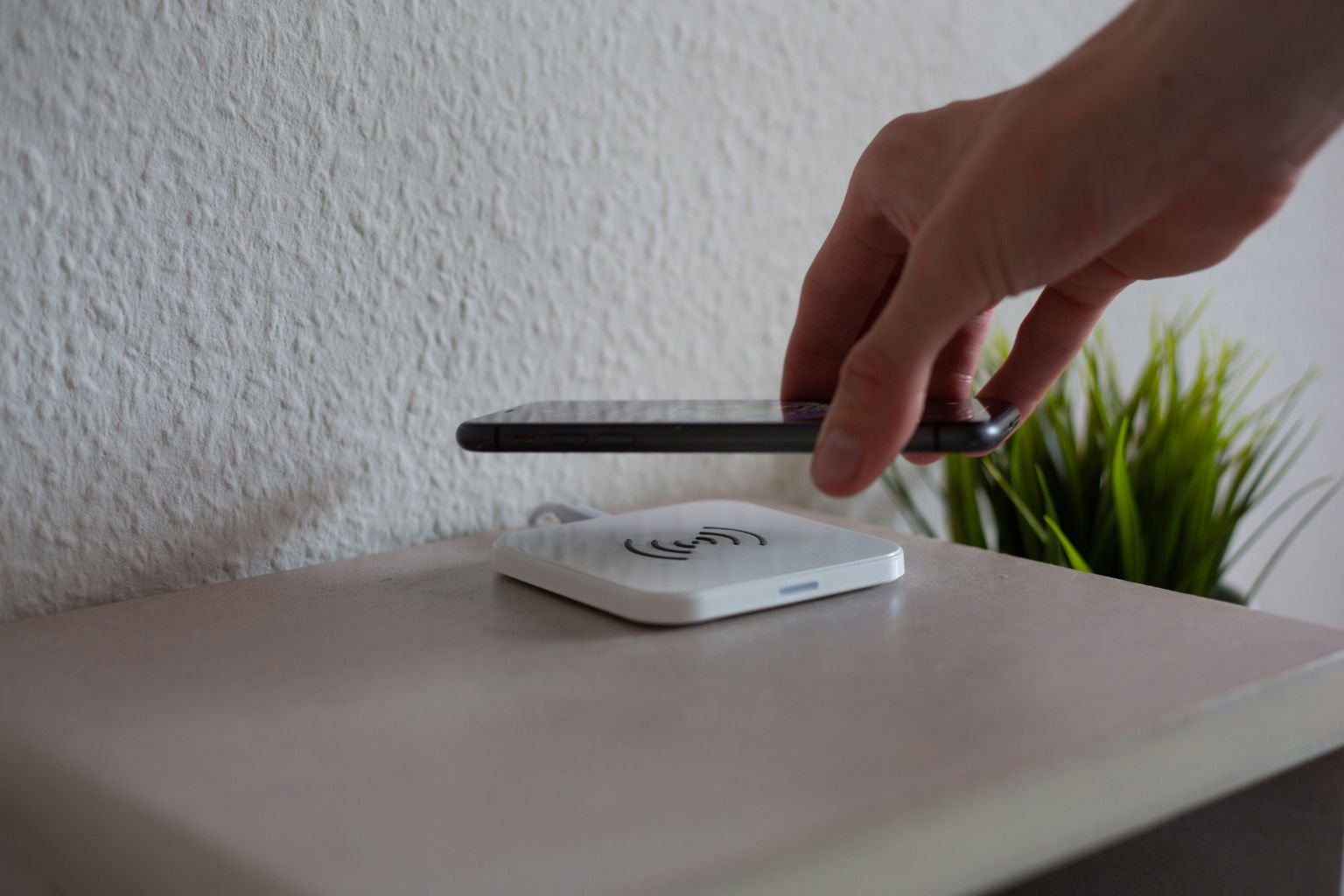
Instead of connecting and removing a cable repeatedly, you place a compatible phone on a charging pad or stand. This is convenient for people who frequently check messages, take calls, or move their phone while working.
An Ambrane wireless charger can be considered for a desk or bedside setup where easy placement and reduced cable handling are important. Depending on your routine, you may prefer a flat charging pad, upright stand, magnetic charger, or multi-device charging station.
Wireless charging may suit you when you:
- Charge your phone several times during the day
- Want fewer loose cables on your desk
- Need to view notifications while charging
- Use wireless-charging earbuds or accessories
- Prefer a fixed charging place at home or work
Always Check Your Phone’s Compatibility
Not every phone supports wireless charging, and compatible phones may support different charging speeds or alignment systems. Check your phone’s specifications before selecting a charger.
The power adapter connected to the wireless charger must also provide suitable output. An underpowered adapter may prevent the charger from delivering its intended charging speed.
Your phone case can affect charging too. Thick cases, metal components, cards, or incorrectly placed magnetic rings may interrupt power transfer. Using a compatible case and positioning the phone correctly usually provides a more consistent charging experience.
Wireless charging is mainly about convenience. A wired charger may still be preferable when you want the fastest available recharge, need to use the phone heavily while charging, or own a device without wireless charging support.
Create a Simple Charging Kit
For many users, the best approach is not choosing one charging solution over the other. It is using each accessory where it works best.
Keep a wireless charger at your desk or bedside for regular charging. Carry a power bank in your backpack, handbag, or travel pouch for situations where a socket is unavailable. This combination covers routine charging as well as unexpected battery emergencies.
A useful charging kit can include:
- A power bank that matches your normal device load
- A wireless charger for home or office
- A compatible and good-quality charging cable
- A compact wall adapter with suitable output
- A small pouch for organised travel storage
This type of setup is often more practical than buying several accessories that perform the same function.
Which Charging Solution Is Better for Travel?
A power bank is generally the more practical option while travelling because it does not depend on an immediate wall connection. You can use it during a journey, at an airport, in a cab, or while exploring a new place.
Your ideal capacity will depend on the length of the trip and the number of devices you carry. Someone taking a short daily commute may prefer a compact model, while a person travelling for several days may benefit from a larger-capacity option.
Portability should still be considered. The most powerful option is not always the most convenient one if it takes up too much space or adds unnecessary weight to your bag.
Which Charging Solution Is Better for Daily Use?
A wireless charger is particularly convenient for predictable daily charging. You can keep it at your desk, bedside, or another place where you regularly leave your phone.
It is useful when you want to top up the battery during the day without repeatedly handling a charging cable. A charging stand can also keep the screen visible for calls, notifications, alarms, or work-related messages.
However, a power bank can still be useful for daily routines, especially when you commute for long hours or frequently work away from a fixed desk. The right choice depends on where you spend most of your time.
Use Charging Accessories Safely
Choose charging accessories from reliable manufacturers and check for appropriate safety protections. Keep power banks and wireless chargers away from moisture, excessive heat, and direct sunlight.
Stop using accessories with damaged cables, swollen batteries, loose ports, or unusual overheating. These signs should not be ignored.
Keep coins, keys, cards, and other metal objects away from a wireless charging surface. Do not leave a power bank completely discharged for extended periods, and follow the manufacturer’s instructions for storage, charging, cleaning, and adapter compatibility.
Final Thoughts
The right charging solution should make your routine easier. A high-capacity power bank provides useful backup during long journeys, demanding days, and multi-device use. A wireless charger offers a convenient way to keep your phone powered at home or work.
Using both creates a balanced setup for travel and everyday life. Start by checking your phone’s charging standards, then compare capacity, speed, compatibility, portability, and safety.
With the right combination of charging accessories, you can spend less time worrying about battery percentages and more time using your devices confidently. Choose a setup that matches your routine and keep reliable power within reach wherever your day takes you.
